Big Auto's Carbon Conundrum
Plus, Used EVs and the War on Stop-Start

Greetings from Motown!
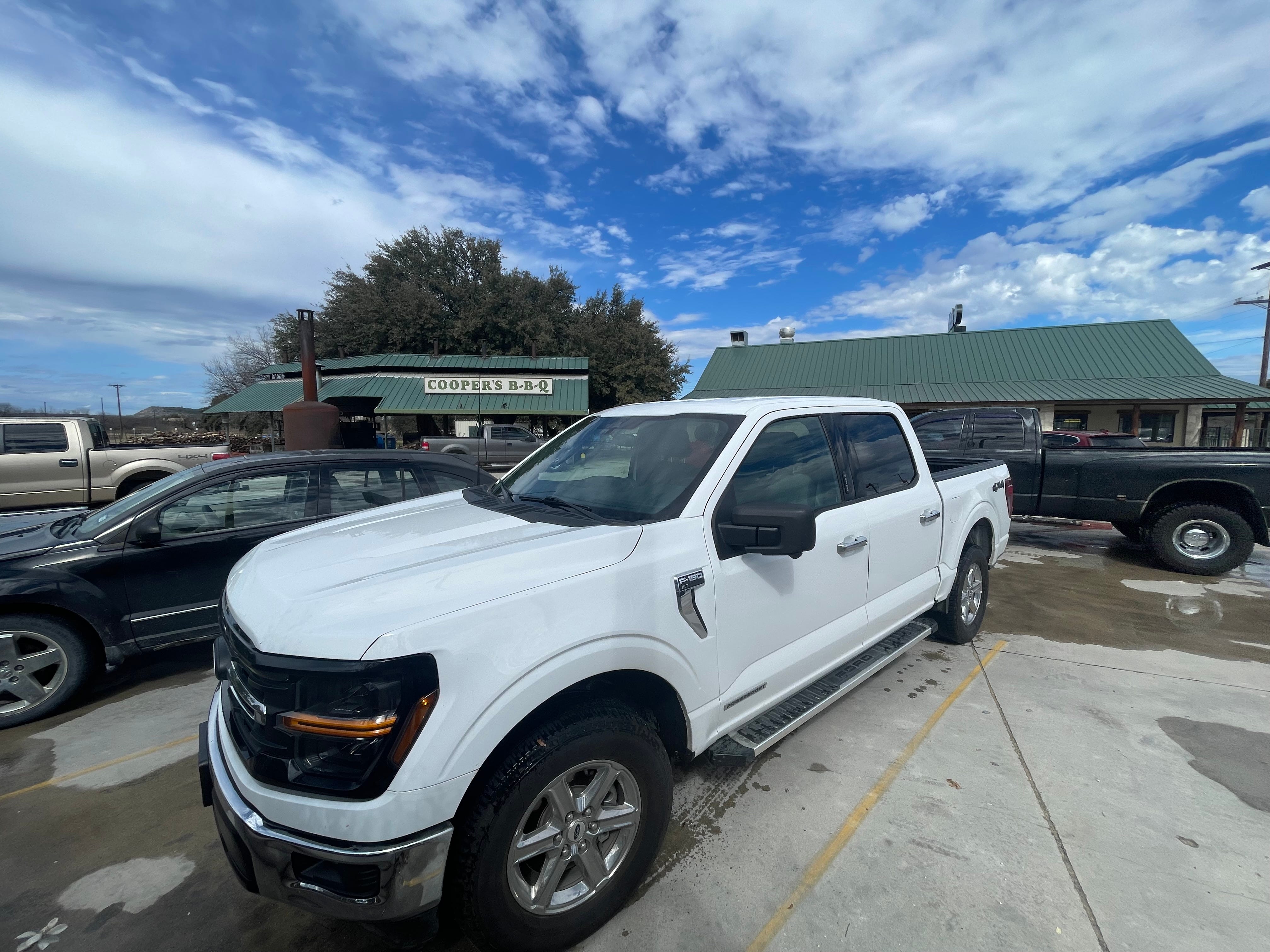
I spent five days over the past week driving around Central Texas in a white Ford F-150 pickup, which is possibly the most Texas thing anyone can do that doesn’t involve Willie Nelson.
My hybrid F-150 got just over 17 miles per gallon in more than 600 miles of driving. It would have been lower if I had not kept the cruise control set at 70 on I-10 in the West Texas desert, where the speed limit goes up to 80 mph. That mileage isn’t bad for a half-ton truck, but it’s a well short of the U.S. government’s MPG and climate emissions targets.
At least, until now. The end of U.S. government regulation of vehicle CO2 emissions is Topic A for today’s High Speed Rodeo.
The Auto Industry’s Dream Come True?
The Trump administration’s decision last week to cancel the Environmental Protection Administration’s authority to regulate CO2 emissions, and its related actions to roll back and neuter Transportation Department fuel economy standards, create a situation automakers in the U.S. market have not experienced in decades:
The fuel efficiency/CO2 emissions of cars and trucks sold in America will now be decided solely by consumers and automakers. At least for a while. *
Trump’s actions mean federal environmental regulators no longer have authority to steer the auto market away from fossil fuels. The Transportation Department doesn’t have authority to fine automakers who miss Corporate Average Fuel Economy targets because they sell too many V-8 powered trucks. The CAFE standards still exist, but their enforcement teeth have been pulled.
On the surface, this looks like the dawn of the consumer-driven free market that automakers and car dealers have dreamed about for years.
The industry’s complaint with the Biden administration’s pro-EV regulatory policies was that they created a mandate to boost EV sales to more than half of total U.S. vehicle sales by 2032 that was unachievable in a country where even subsidized consumer demand for EVs was stuck at under 8%.
The counter-argument: An accelerated EV transition, albeit driven by regulation and subsidized by taxpayers, would reduce a major source of climate-disrupting emissions and save consumers billions in fueling costs. That argument has lost. For now.
“They’re popping champagne corks at the OPEC and GM headquarters but also in Beijing, where China’s EV makers will face no competition from the U.S. to dominate the world’s clean car market,” said Dan Becker, director of the Center for Biological Diversity’s Safe Climate Transport Campaign.
Trump’s abrupt 86’ing of Biden’s pro-EV policies cost automakers more than $50 billion in stranded EV investments.
But in return, the industry, and especially the Motor City Three, have the freedom to rev up sales of the combustion trucks and off-road capable SUVs that generate nearly all of their profits. And they can shift capital spending to refreshing their combustion lineups (and buying back shares) rather than pouring investment into money-losing EVs.
Ford told investors last week that 75% of its capex over its current financial plan will go toward larger trucks and hybrids.
“We're doubling down on our icons, making the next generation F-150 and Super Duty absolutely breakthroughs in terms of cost, technology, powertrain choice, and functional features. We're also expanding our off-road and performance lineups across our most important and popular franchises. At the same time, we also plan to expand our market coverage with more affordable trucks and SUVs,” Ford CEO Jim Farley told analysts during the company’s Q4 investor call last week. (See a transcript here.)
Ford is not alone in shifting back to combustion. Stellantis is reviving diesel vehicles for Europe, along with restoring Hemi V-8s to its North American Ram trucks. GM plans to build large petrol-fueled SUVs at a Michigan factory previously assigned to build EVs.
Now it’s time to explain the asterisk * above.
Hitting the gas on fossil-fuel vehicles looks like a sure-fire winning strategy for America until you reckon with some inconvenient truths.
The next U.S. Presidential election is in less than three years. The industry can ill afford another cycle of regulatory whiplash, as one of its main lobbying groups warned in a letter to the Trump EPA.
Gasoline prices could spike, as they did in 2008. See also: Threat of war in the Persian Gulf.
Lower-cost EVs such as the Slate Auto truck or Rivian’s R2 could catch on with consumers.
California and other states could win back their power to regulate auto emissions. If courts side with California’s legal challenge, the auto industry dream could become the patchwork of state-by-state climate emissions standards that industry has always opposed.
Chinese automakers could find a way to bring their high-tech EVs to the U.S. market via a partnership with an incumbent automaker. Bloomberg reported that Ford’s Farley pitched Trump on allowing Ford to partner with a Chinese EV maker.
A U.S. manufacturing joint venture between Ford and a Chinese EV power such as BYD or Xiaomi could result in a new U.S. factory with the latest automation and hefty tax subsidies that takes sales from existing U.S. factories, just as new Japanese and Korean owned plants in the Southern United States took market share and jobs from MC3 brands in the 1990s and 2000s.
Even if no U.S.-Chinese JV materializes, Chinese EVs are headed for Canada, Mexico, Latin America, Europe and other markets where incumbent automakers compete.
“Made in China” is a red flag to many governments for economic and national security reasons.
But more Western consumers want a budget-friendly alternative to pricey rides.
In a new Automotive News poll, more than half of Canadians surveyed said they have no problem with Chinese-made EVs, a sharp reversal from attitudes found in 2024.
That’s why Volkswagen, which doesn’t have a tariff-protected U.S. pickup truck franchise to keep the lights on, says it has no intention of slowing its EV roll. And it’s why GM, Ford and other legacy automakers will have to continue to invest in EVs, even if at lower levels.
In the medium term, EVs could serve as models that generate a halo of tech coolness and social awareness for consumers not impressed by images of gasoline trucks leaping sand dunes.
Just this week, Ford did yet another teaser for its forthcoming affordable electric truck.
There’s a $30,000 EV in there somewhere.
Lightning Laps
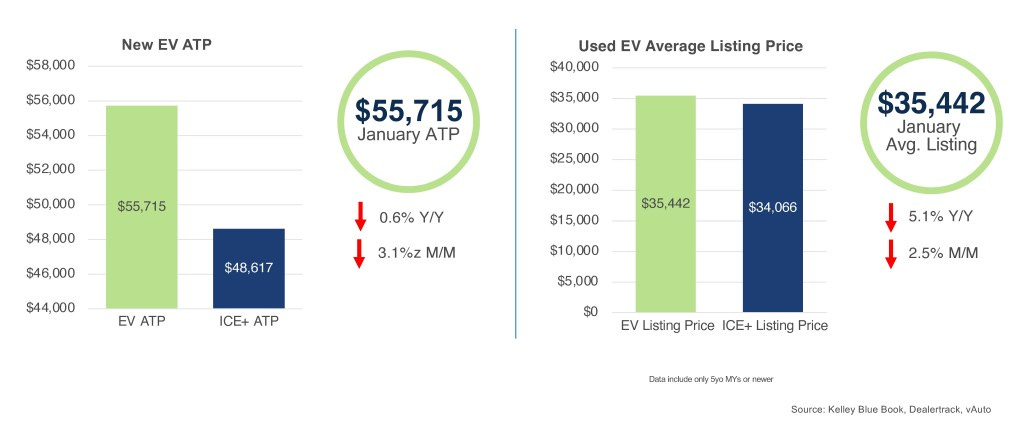
Two words: Used EVs. Sales of second-hand EVs jumped more than 20% in January, according to new data from Cox Automotive. With federal subsidies for new EVs gone, auto retailers are looking at the growing supply of used EVs as a potential solution for consumers priced out of the new vehicle market. New EVs on average sell for significantly more than combustion models, but used EVs trade at close to parity.
Yes, you are paying for Trump’s tariffs. The New York Fed issued a report concluding that U.S. importers (i.e. GM and Home Depot) are paying the bulk of the costs for Trump’s tariffs. A White House official said the report’s authors should be “disciplined.”
President Trump hates stop-start technology that saves fuel by shutting off vehicles when they’re paused at a light. The President and other administration officials made a big deal of their plan to eliminate fuel economy credits for the systems and other so-called “off-cycle” fuel saving technology. The industry wants to keep them.
Tesla has dropped the term “Autopilot” from its marketing and has thus avoided a stop-sale order threatened by California regulators.
Uber plans to invest $100 million in charging infrastructure for robotaxis.
Rivian got a brief bump in its stock price after raising its delivery forecast for this year. But the EV startup’s shares are still down more than 20% for the year so far.
Thanks for reading! More later…