Life during Wartime
There is something worse for Detroit than Trump's trade war

Greetings from Motown!
I was still fairly new to covering the auto industry in August 1990 when Iraqi dictator Saddam Hussein invaded the oil fields of Kuwait, igniting the first U.S.-Iraq War.
Then as now, the Motor City Three automakers leaned heavily on pickup trucks and SUVs for their profits, though they sold more sedan models than they do today.
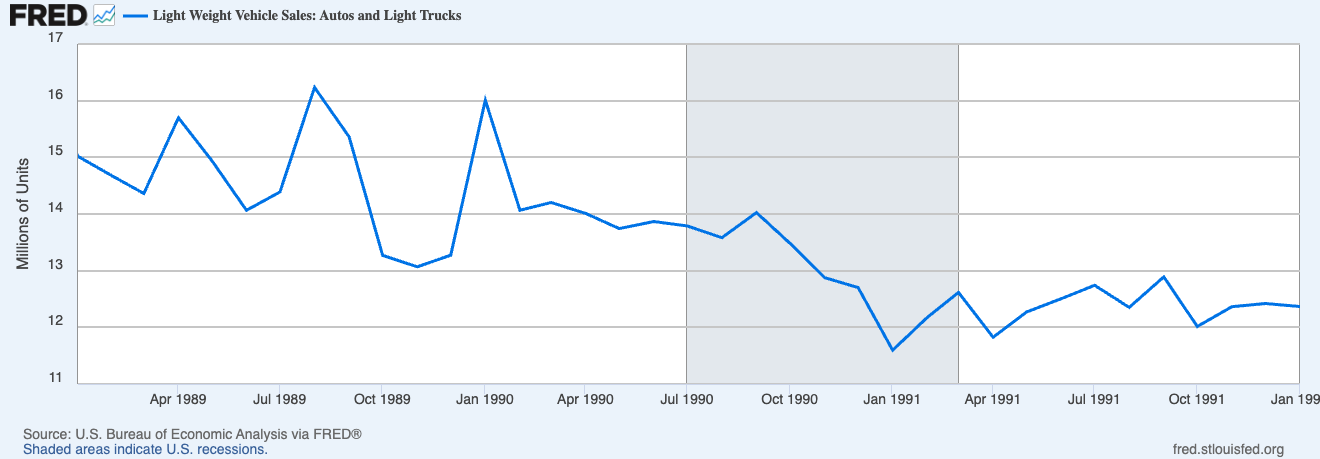
The shock of Saddam’s aggression, the disruption of global petroleum supplies and the subsequent war sent U.S. auto sales into a nosedive.
From a sales pace of between 14 million and 15 million vehicles a year in the months prior to August, the annualized pace of sales slumped to just 11.6 million vehicles in January 1991, and remained stuck below 13 million vehicles until June 1992.
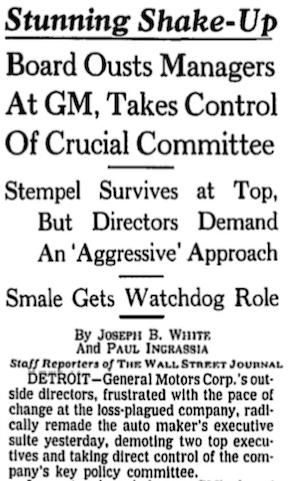
That sales recession pushed General Motors to the brink of bankruptcy and led the board of what was then the world’s largest automaker to oust CEO Robert Stempel.
Here we go again?
The U.S. automakers are on far stronger financial foundations than in 1992. Still, the escalating war in the Middle East is ominous for companies already battered by tariffs and EV losses.
President Trump on Saturday joined with Israel to attack Iran. The Iranian military declared it will close the Straits of Hormuz, choking off oil and gas shipments from Saudi Arabia and other Gulf oil producers. Oil prices jumped Monday.
Average prices for regular gasoline at American filling stations moved above $3 a gallon over the weekend. Markets are betting on even higher prices. For how long is unknowable. The auto sector was already worried about consumer discontent with high prices. A broader energy cost spike won’t help.
During the 2008 financial crisis, sales of pickup trucks sagged as gas prices moved above $4 a gallon outside of California. We’re not there. Yet.
Barring a rapid resolution, the Iran war could deepen the chill on the manufacturing sector, including autos, exacerbated by tariff volatility. As of now, Trump is talking about weeks of war, not a quick end.
Next up: Tariff brawls
Before Trump launched war with Iran, the auto industry’s biggest challenge was endless uncertainty about import taxes.
The outlook for sales and job growth in the auto sector was negative before the bombs dropped on Tehran, as friend of the Rodeo Warren Browne detailed in the latest Vehicle Performance Tracker out earlier today.
Now, automakers and suppliers are girding for battle over billions in tariffs that the U.S. Supreme Court ruled were collected illegally by the Trump Administration.
Consulting firm AlixPartners told its automotive clients they must move quickly to review every contract agreed since April 2, the day Trump imposed the invalidated IEEPA tariffs. Then file claims ASAP to get the tariffs refunded, and renegotiate contracts based on those tariffs continuing.
If that sounds like a recipe for thousands of people-hours of work, tense meetings and litigation, AlixPartners consultant Neal Ganguli says that is “an emphatic and accentuated yes. It’s going to increase complication.” Any official claims process through government agencies or the courts “is going to get clogged in a hurry,” Ganguli told the High Speed Rodeo.
It’s an ill wind that blows no good. Trade chaos is a business opportunity for AlixPartners, which sells tools and services to help companies sort through the mess.
Stellantis feels the burn
The impact of Trump’s volatile policies on trade, regulation and armed conflict goes beyond new legal and consulting bills.
Stellantis last week reported a $26 billion net loss for 2025, mainly because of torched EV investments.
Wasted EV investment was a big problem but not the only one for Stellantis. The company’s revenue per vehicle in Europe was down 735 euros because of “competitive pricing pressure.” Translated: The impact of Chinese competition.
Tariffs took a 1.6 billion euro bite.
Operating margins for 2026 will be in the low single digits.
The company doesn’t expect positive free cash flow until 2027.
Stellantis U.S. factory workers represented by the United Auto Workers suffered the consequences of the company’s money-losing performance. They will get no profit sharing checks this year. GM and Ford UAW workers will get sharply reduced profit sharing payouts.
Lightning Laps
Chinese officials are convening meetings designed to accelerate the country’s technology race with the West. AI is the focus, including humanoid robots, now an auto industry product.
Tesla has done nothing to launch robo-taxi services in California, despite Elon Musk’s promises that the company will soon go after rival Waymo there. Separately, the company jacked up the price of a “cheaper” version of the Cybertruck just ten days after the model launched.
Toyota boosted its offer for supplier Toyota Industries by 10% to $30 billion, in a win for activist hedge fund Elliott Management. The agreement could have a broader impact on Japan’s corporate governance norms. Toyota Industries will unwind cross shareholdings in other Toyota family companies, a win for overseas fund managers who have attacked Japan Inc’s interlocking shareholdings as a bad deal for investors.
Uber could be a majority robo-taxi ride service within 10-15 years, the company’s CEO told a podcast. Uber last month unveiled a drive to provide robotaxi operators with data, infrastructure, fleet support and access to Uber ride customers.
Autonomous driving software company Wayve raised $1.2 billion and is now valued at $8.6 billion. Nvidia, Microsoft and Uber were among the investors.
BYD’s sales in China plunged during the first two months of 2026. After grabbing the lead in the Chinese market BYD is under heavy pressure from Geely and other rivals. But BYD’s sales outside of China are still growing, and surpassed Ford’s global sales in 2025.
Vroom! Vroom!: Autorama, the custom car show, took over Detroit’s Huntington Place last weekend. The gleaming custom cars that compete for the Ridler Prize are upstairs. The real fun stuff is in the basement where garage creators show off their home-made exotic cars. Here are just a few:


Thanks for reading! More later…