The Auto Debt Balloon
Plus, Toyota doubles down on hybrids, Ford's Unfathomable EV

Greetings from Motown!

It’s August. And that means it’s time for a summer vacation. The High Speed Rodeo is going on an extended Westward road trip after this edition. I’ll be away until Labor Day, but I am making plans to refresh the feed during my break.
And now for the news from the World of Cars.
Let’s dig into Toyota’s latest financials and the No. 1 global automaker’s redoubled push to dominate the growing global hybrid segment.
Ford gave its make-or-break electric truck a name (and teased a product that could drive Mustang loyalists mad.)
BYD achieved a milestone in its globalization strategy.
But first…
America’s auto debt explosion
Auto loans are now the second-biggest type of debt for American households behind home mortggages. Car loan balances are now larger in aggregate than student loan debt, according to new Federal Reserve data.
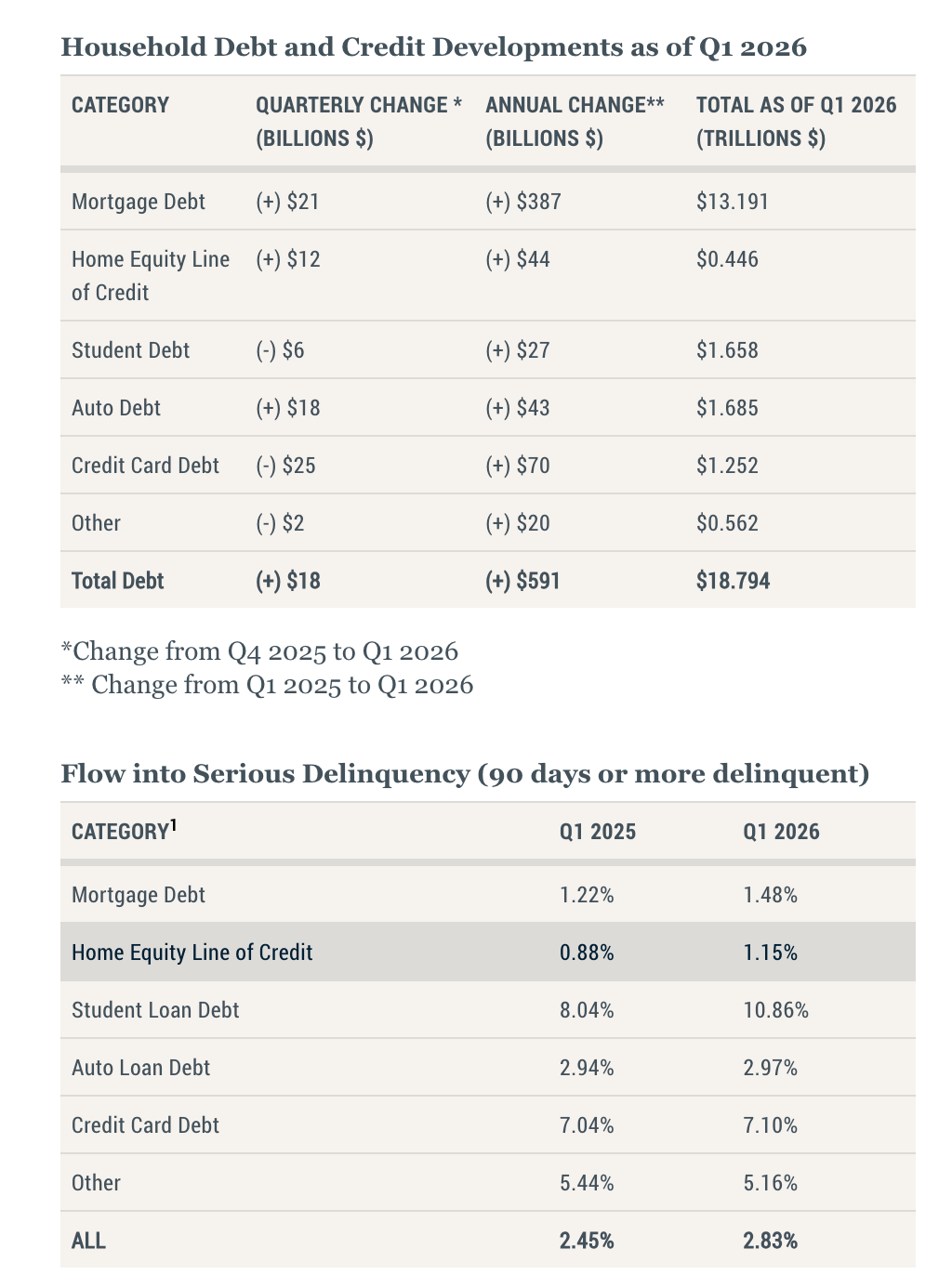
For those who’ve been following the rise in vehicle prices since the pandemic, this data may not come as a shock. But it is one more yellow flag waving over a U.S. auto market that has, so far, proven relatively resilient in the face of a stagnant job market, spiking gas prices due to the U.S.-Iran quagmire and the diminishing purchasing power of many working Americans.
U.S. wage earners now get a record low share of GDP as automation and AI boost productivity faster than wages, according to new government data.
Here’s another sign of trouble: Nearly 30% of would-be new car buyers are turning up in showrooms with vehicles to trade in that are worth less than the amount still owed on the loan, according to Edmunds, the auto shopping and market research company.
The industry refers to this as being in “negative equity,” or “upside down.” Automotive News, the authoritative publication for auto dealers, called the rising number of consumers underwater on their loans a “crisis.”
There are signs that repossessions are on the rise, a classic symptom of an unhealthy consumer economy. However, the Fed data shows only a slight uptick in the rate of delinquent car loans.
The auto industry’s belief has always been that people will keep paying car loans even if they have to skip other payments. And many Americans are skipping credit card payments, the WSJ reports, as they wrestle with inflated prices for food, gasoline and some (not all) other goods and services.
CBS has a price tracker here. Here’s CPI data compiled by the Fed.
Despite the signs of strain, lenders are still eager to make car loans. New Cox Auto data shows credit availability at an 11-year high. Sub-prime borrowers are finding it harder to get credit, but approval rates for consumers with weak credit are still higher than a year ago, according to Cox.
One last puzzle piece: Cox’s Kelley Blue Book’s July market report shows average vehicle transaction prices “holding steady” at just under $50,000.
New-Vehicle Average Transaction Price
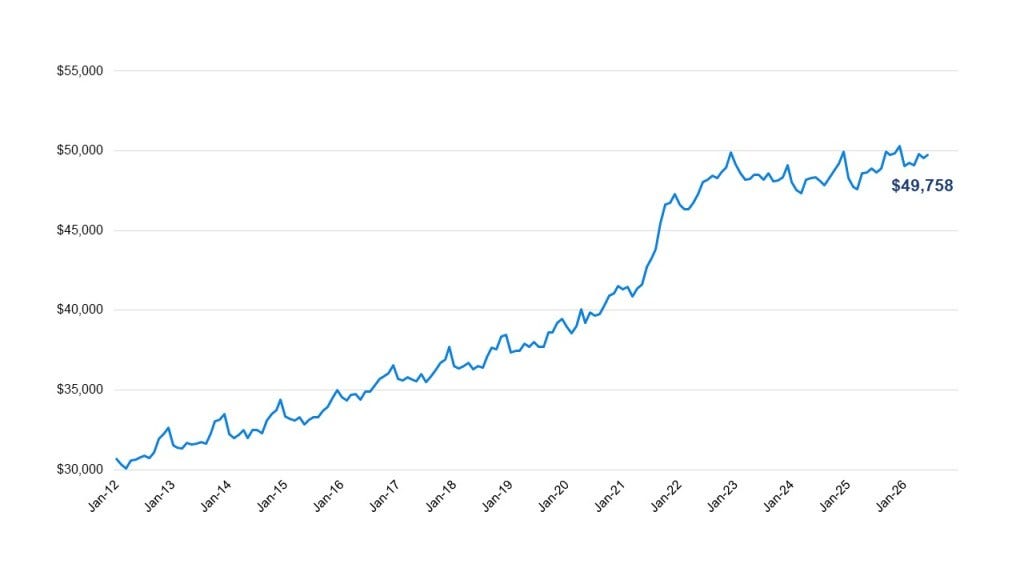
I am no data scientist, but that graph looks like the track of a trend that couldn’t go on forever, and didn’t.
Car prices haven’t reverted to pre-pandemic levels, and they won’t if the industry can help it. But mass market automakers appear to realize they cannot maintain their current size and employment selling only luxury goods to AI Economy Winners.
Which brings us to Ford’s new “affordable” EV…
Full Fathom Five
The pickup truck that is the first fruit of Ford’s much-touted “skunk works” effort to match Chinese EV technology and manufacturing costs will be called the “Fathom.”
Not Ranchero, as some had speculated. Not some other name in Ford’s historic pantheon. Sorry Boomers. Ford isn’t interested in another nostalgia trip. (See the Mustang item below.) This truck’s for your kids.
Fathom prices start at $29,495, including delivery charges. That makes the Fathom affordable in the industry’s view.
The auto media is already comparing the Fathom to startup Slate’s small electric truck.
The Slate truck has a very different sales concept. The base truck at $26,400 comes stripped down. Buyers choose from a menu of options, including a kit to convert the pickup to an SUV. The Fathom will be packaged in a more traditional way.
Real prices for both trucks in the United States will likely be more in the high $30,000 or low $40,000 range.
Buyers, however, may not compare just the Fathom and Slate. Price is as relevant as the powertrain. Probably more relevant. That widens the field.
The Fathom’s toughest competitor plays for its own team.
Ford’s popular hybrid Maverick compact pickup starts at $29,990, just $495 more than the new EV.
Ford dealers struggled to find buyers for electric trucks. But they know how to sell Maverick hybrids. They moved 46,507 of them in the first half of this year. Refuel anywhere hybrids have gained nearly 3 percentage points of market share in the United States so far this year, while battery electric vehicle sales have stagnated as federal tax subsidies dried up.
Then there’s Hyundai’s small Santa Cruz pickup, a petrol-only model starting just below $30,000. That could be an alternative for some shoppers.
You can put in a “pre-order” for a Fathom starting early next year.
By then, Ford could fill in the blanks for key details such as driving range and option prices. Ford will likely start delivering the trucks from its Louisville, KY assembly plant later next year.
Toyota’s hybrid overdrive
Toyota, the #1 global automaker by sales, is having a bumpy year.
Tariffs are squeezing North American profit margins to a measly 2%. Lexus and Toyota brand sales are down in China. The Mideast War is sinking sales in that region. The automaker reported spending the equivalent of $879 million in the latest quarter supporting suppliers hit by rising tariff and other costs. (See the fiscal Q1 slide deck here.)
A weak yen is magnifying dollar profits and helped Toyota boost profit guidance by 13%. Toyota will buy back $6 billion in stock. The investor response to that? Shares fell, and are down 13% for the year so far.
Hybrids could be Toyota’s way out of the doldrums. Toyota is launching a new generation of lithium batteries for its hybrids, and expects to have capacity to equip 600,000 vehicles a year with those new batteries in 2027-2028.
Sales of the company’s gas-electric hybrids rose by nearly 7% in the March-June quarter, and Toyota forecast it will deliver more than 5 million hybrids for the full fiscal year, roughly half its projected global sales.
Toyota’s decision to put hybrids ahead of EVs in its product strategy looks better with age as U.S. and European rivals write-off billions on failed EV projects.
Toyota’s collaboration with Chinese partner GAC to develop a new EV appears to be working out. But matching Chinese EV makers is a critical item on Toyota’s to-do list as BYD and others gain share in markets such as Southeast Asia Toyota once dominated.
Speaking of which…
BYD’s Brazilian Milestone
Chinese automaker BYD last week rolled out a made-in-Brazil hybrid it said will run on gasoline or ethanol and will have 50% locally made parts by next year.
The ethanol/gas/grid juice powertrain is impressive. What should scare rivals more is the speed with which BYD is building the capability to make vehicles that meet Brazil’s local-content targets.
BYD took over and began retooling the assembly plant formerly owned by Ford in Camacari Brazil just three years ago.
Now, BYD aims to make the Camacari complex an export hub for Latin America, with projected capacity at 300,000 vehicles a year. Camacari is BYD’s largest factory outside China. Maybe not for long.
Lightning Laps
Mustang heresy!?! Ford executives showed dealers a prototype for a four-door Mustang sedan, the WSJ reports. A four-door Mustang is a contradiction in terms for Mustang purists. But Ford already ignored the purists to bring out The Mustang Mach-E electric SUV.
A Mustang sedan would get Ford back into a segment it has abandoned in the U.S. market, and advance Ford CEO Jim Farley’s strategy of using the market mojo of the automaker’s best-loved brands to make money in segments that are largely commoditized.
A Waymo robotaxi struck a pedestrian in Dallas who had been hit first by another vehicle and thrown into the Waymo’s path. The victim died. Preliminary reporting suggests authorities are not blaming Waymo’s robotaxi for the death. Waymo just opened its service to anyone in Dallas on Aug. 4.
Volkswagen’s wide-ranging restructuring now includes new management and an overhaul of its strategy for the U.S. market. Once again, VW management is floating the idea of designing a pickup truck for the United States, possibly in partnership with Ford. Why would Ford want to enable another rival for its Ranger mid-size truck? Great question.
Meanwhile, the Porsche and Piech families who control VW along with the State of Lower Saxony demanded swifter action to put the automaker back on track, reinforcing CEO Oliver Blume’s call for cost-cutting that could eliminate 100,000 jobs.
The crisis at VW and increased stress at BMW and Mercedes are driving Germany’s auto parts makers deeper into debt. A new study by PwC, seen by Reuters, found that German suppliers’ debt reached 102% of operating earnings.
German politicians are feeling the heat to respond to the auto sector crisis and China’s role in it.
Aston Martin is in trouble with creditors who object to the British luxury brand’s plan to sell branding rights.
Defense contractors under pressure from the Trump Administration to boost production of missiles and other weapons being consumed by the war in Iran are hoovering up supplies of semiconductors that automakers need.
Struggling luxury EV maker Lucid will delay the launch of a lower-priced Gravity sedan until the second half of 2027 to cut near term costs. Bad news. But the disclosure that Saudi Prince Alwaleed bin Talal has acquired 5% of Lucid shares buoyed the stock. Saudi Arabia’s Public Investment Fund already owned 60% of Lucid shares, which have lost 97% of their value in the past five years.
Uber plans to invest up to $10 billion to expand its network of robotaxis over the coming years. CEO Dara Khosrowshahi said the company’s partnership with Waymo is “very important,” but that Uber will work with rival AV developers. “We want to make sure that we're not dependent on one partner,” he said.
Uber’s profits in the here and now fell short of Wall Street expectations. Rival Lyft also reported lower-than-expected profits as it spent more on promotions to get riders in cars.
General Motors renewed its alliance with Chinese state-run automaker SAIC until 2047. GM and SAIC plan to export the new Buick Electra line of electric vehicles from China. The Electra 7 SUV is getting glowing reviews. But U.S. customers can’t have them.
Tesla is fighting with European auto safety regulators to keep data about its “Full Self Driving” system secret.
Have a great August. More later…