Waymo keeps screwing up
Plus, Hard times in Germany and Tesla's super loyal owners

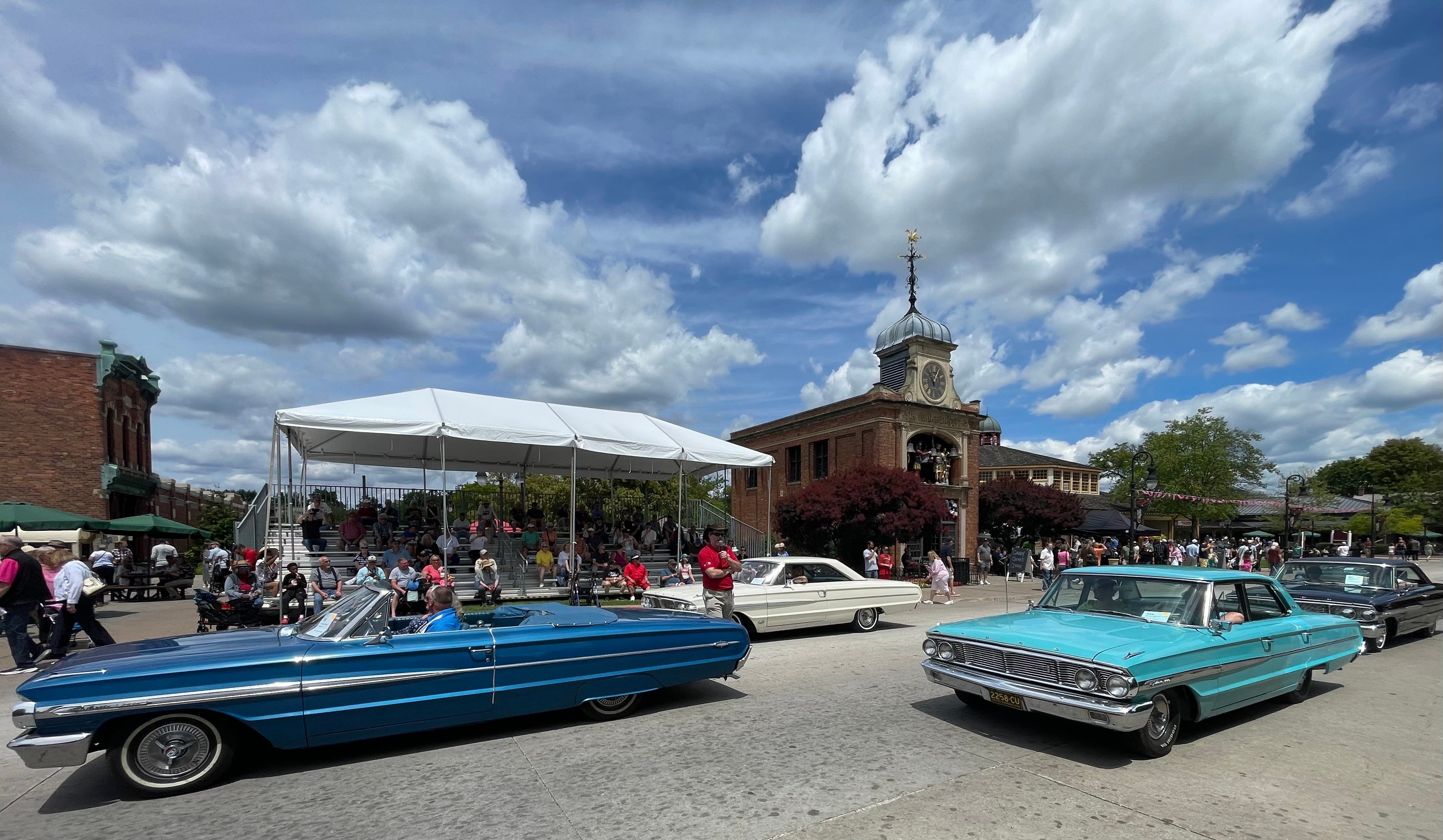
Greetings from Motown!
What better way to greet the summer solstice than to wander through the streets of Henry Ford’s Greenfield Village admiring the annual Motor Muster of classic cars and trucks from every decade since the 1930s?
So much chrome! So many curves and angles! Tailfins! V-8 Power! Space age names!
There were a few Volkswagens on display, but cars from Japan were conspicuously absent. This is Detroit after all.
Cars from the Golden Age of Detroit aren’t as golden as they look when they are safely parked at a classic car show. Try driving one of these things. The shaky steering, undersized drum brakes and absence of impact protection will have you looking at your high-tech, airbag equipped, wind-tunnel designed modern ride with new respect.
I wonder what a show like this will look like in 50 years. Will Buick, Ford and Dodge be artifacts of the past, as the DeSotos, Studebakers and LaSalles on display at Greenfield Village are today? (For more from the Motor Muster, see the gallery below.)
But no more time for nostalgia. The future is coming at us at breakneck speed, and it doesn’t see the guardrails. Today, we’ll look at the latest troubles at U.S. robotaxi leader Waymo, fresh signs of stress among Germany’s automakers and new data that shows the hidden power of the Tesla brand.
Waymo’s “edge case” problems
For the second time in a month, Waymo is recalling the roughly 3,900 robotaxis it has deployed on U.S. roads to fix the AI driving software so the vehicles don’t plow into marked highway construction zones.
Waymo and National Highway Traffic Safety Administration regulators counted 13 incidents in April and May in which Waymo robotaxis drove past ramp closure signs or into freeway lanes blocked off for “active construction.” The official account is here. A hair-raising description of one incident from a passenger stuck inside the Waymo as it barreled through a construction zone is here.
Waymo realized that it had a problem with its robotaxis driving into construction zones in April, NHTSA records show. As of June 17, Waymo told the agency it didn’t have a fix. “The remedy is currently under development. In the interim, Waymo modified the scope of vehicle operations to restrict freeway driving,” the company told regulators.
The latest Waymo foul-ups come as Alphabet and its rivals are accelerating efforts to expand driverless ride services in U.S. cities. Waymo geared up its service in six of the U.S. cities hosting World Cup soccer matches.
The Trump Administration meanwhile is pushing ahead with regulatory relief for the autonomous driving industry. A package of proposals that would allow automakers to deploy more vehicles with self-driving technology that doesn’t comply with current federal vehicle safety standards is awaiting approval at the Office of Management and Budget.
Transportation Department regulators are reviewing proposals from Amazon-backed robotaxi operator Zoox to deploy more “purpose-built” autonomous vehicles, NHTSA chief counsel Peter Simshauser said during the Center for Automotive Research Management Briefing Seminar last week.
The administration is reviewing vehicle safety standards broadly to assure rules don’t “ossify engineering choices,” he said.
The fight over what constitutes prudent regulation and what government oversight threatens to ossify technology is far from over. U.S. Senators are digging into whether Tesla has exaggerated the safety benefits of its semi-autonomous “Full Self Driving” technology.
In Europe, Dutch regulators have approved the use of FSD on their country’s roads, a potential gateway to FSD getting approval throughout the EU. But Reuters reports that Swedish regulators are leaning toward refusing clearance for FSD unless Tesla reprograms the system so vehicles cannot exceed speed limits.
BMW amplifies German Auto AG’s angst
One month after taking over as BMW CEO, Milan Nedeljković and BMW’s board warned investors to expect “a significant decline in profit and free cashflow in the second quarter versus previous year.”
Not even three months ago, former CEO Oliver Zipse assured investors BMW was “on track” for “stable earnings.” That was then. The disruption of the global economy caused by the U.S.-Israel war with Iran and what BMW described as “the negative development in the Chinese automotive market…. particularly for non-electric vehicles” have rendered Zipse’s outlook inoperative.
BMW’s share price tanked, wiping out more than 5 billion euros in valuation.
BMW now officially joins Volkswagen, Porsche and Mercedes in struggling to adapt to a world where German brands don’t have the power they once had to command price premiums and steady consumer demand.
German brands are now your father’s Oldsmobile as far as affluent, young Chinese consumers are concerned.
Chinese brands are gaining market share in Europe. In the United States, tariffs are biting into profits and sales for the German brands.
Next up: Deeper cost-cutting across the German auto sector, which would also hit German suppliers.
Other European brands are floundering as well. Investors aren’t buying Jaguar Land Rover’s plan to focus on growth in the United States to offset its decline in China. Maserati, the troubled Stellantis luxury brand, is undergoing yet another strategic reboot, which could include an alliance with another automaker. (That’s a form of consolidation, as is JLR’s alliance with Stellantis in the U.S. market.)
Tesla’s secret weapon
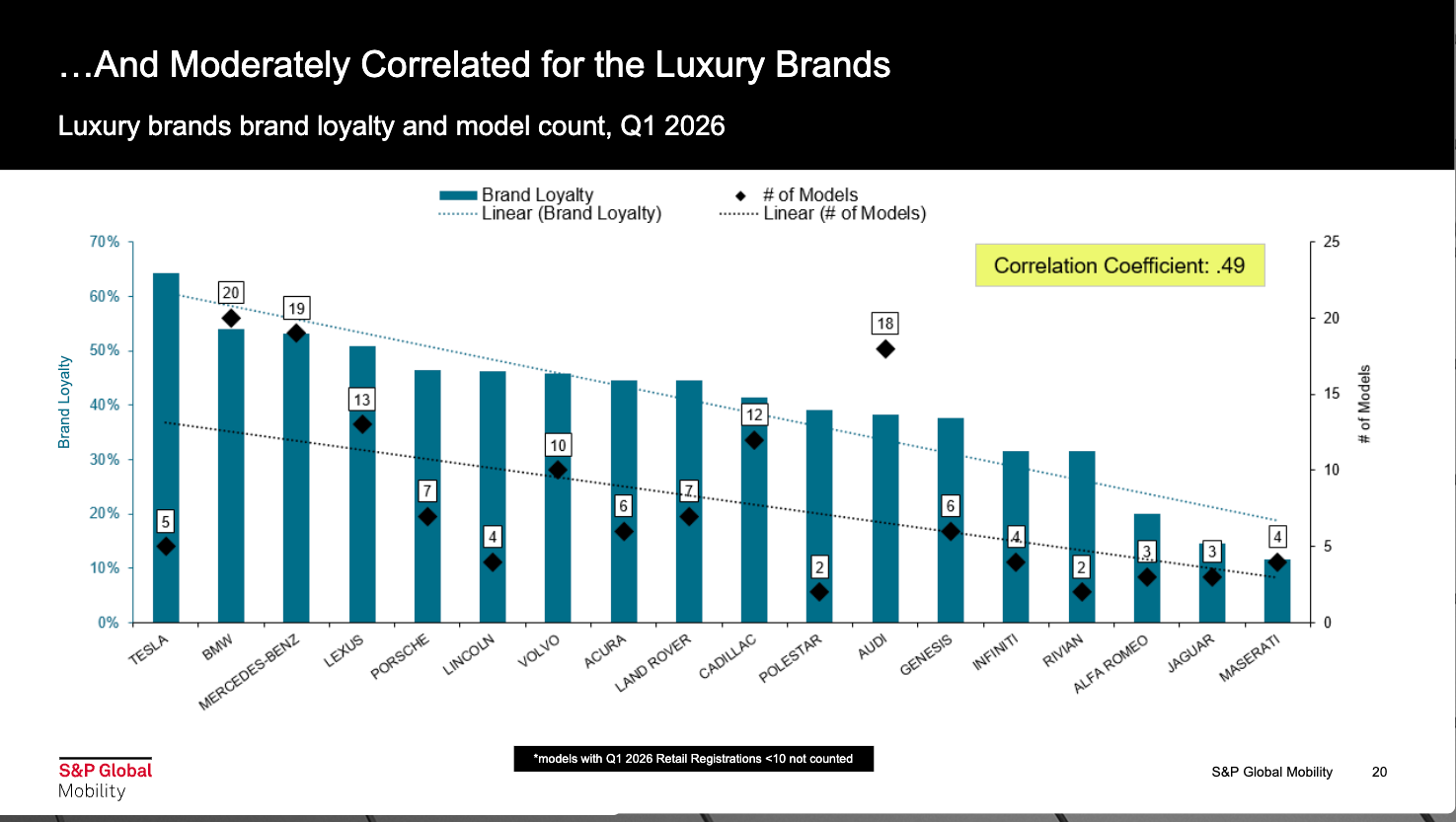
Loyal repeat buyers are the most valuable customers any brand has. Doubly so in the auto industry where purchases happen years apart and competition is always brutal.
This is why the chart above from S&P Global Mobility’s annual brand loyalty study is so revealing. In general, the more models a brand has to serve different needs across a diverse customer base, the more repeat buyers it has.
There’s a notable exception: Tesla.
“Tesla has leading loyalty among luxury brands despite having only a few models,” S&P Global’s Tom Libby told a webinar last week. Libby has been analyzing repeat buyer data for years.
Elon Musk’s abrasive X.com persona and his political adventures get a lot of media attention. But so far, they have not substantially eroded Tesla owner loyalty in the United States.
Meanwhile, for those of you who discount Lexus as the “accessible beige” of luxury auto brands, S&P Global reminds you that about 23% of Lexus owner households are super-loyalists, meaning their three most recent vehicle purchases were Lexus vehicles. That’s tops in the luxury segment.
Among mass market brands, Ford has a 32% share of super-loyalists, followed by Chevrolet (29%), Honda (27%) and Toyota (26%.)
Lightning laps
Demand for big vehicles softened rapidly as gas prices accelerated this spring, the head of General Motors’ North American operations said during the Center for Automotive Research Management Briefing Seminar. Normally, Duncan Aldred said, it takes six months after gas prices spike for a significant shift in the mix of large vs. small vehicles to show up in sales data. But in the case of the Iran War, which started Feb. 28, that shift is happening now, he said.
Fortunately for consumers and the Motor City Three’s big truck franchises, gas price are back below $4 a gallon. Oil tankers are moving again through the Strait of Hormuz.
Rivian is cutting its workforce, again, as it tries to slow its cash burn.
A new wave of electric pickup trucks will try to dispel the curse laid on the EV pickup segment by the flops of the Cybertruck and the F-150 Lightning. The WSJ’s Dan Neil handicaps the coming vehicles from Slate, Ford and Telo here.
The United Auto Workers is blasting General Motors for deploying collaborative robots to do tasks at its “Factory Zero” EV assembly plant in Detroit after cutting the operation’s workforce by 1,000 people. “Our manpower is being taken away from us,” UAW Local 22 President James Cotton told Crain’s Detroit Business. “From top to bottom, we’re disgusted that they have cobots in our plants.” (A non-paywalled version of the story is here.)
How the union responds to next-generation automation promises to be a contentious issue when the UAW and the Motor City Three negotiate new contracts in the spring of 2028. Who will lead those talks is up for grabs in a contest for the UAW presidency in which incumbent Shawn Fain faces five challengers.
EV registrations rose by 3% globally in May, but are flat for the year to date, according to new data from Benchmark Mineral Intelligence. Through the first five months of 2026, rising EV sales in Europe and markets outside China, Europe and North America barely offset sharp declines in EV demand in China and North America. The U.S. and China have both cut EV subsidies.
Carmax shares tumbled after the used car retailer’s new CEO said its costs were too high.
Automakers are regretting an effort to enlist President Trump’s support for their position that “right to repair” laws should retain some limits on access to vehicle data for individuals and independent repair shops. Representatives of Ford and GM learned, as certain world leaders have, that meetings with Trump don’t always produce the desired result. Jim Motavalli wrote a clear account of the complex issues in Autoweek,
High Iran War gas prices are battering the RV industry, long a canary in the economic coal mine.
Thanks for reading! I’m delighted to report that the High Speed Rodeo now has more than 700 subscribers. If you are not one of them yet, please hit the button below.
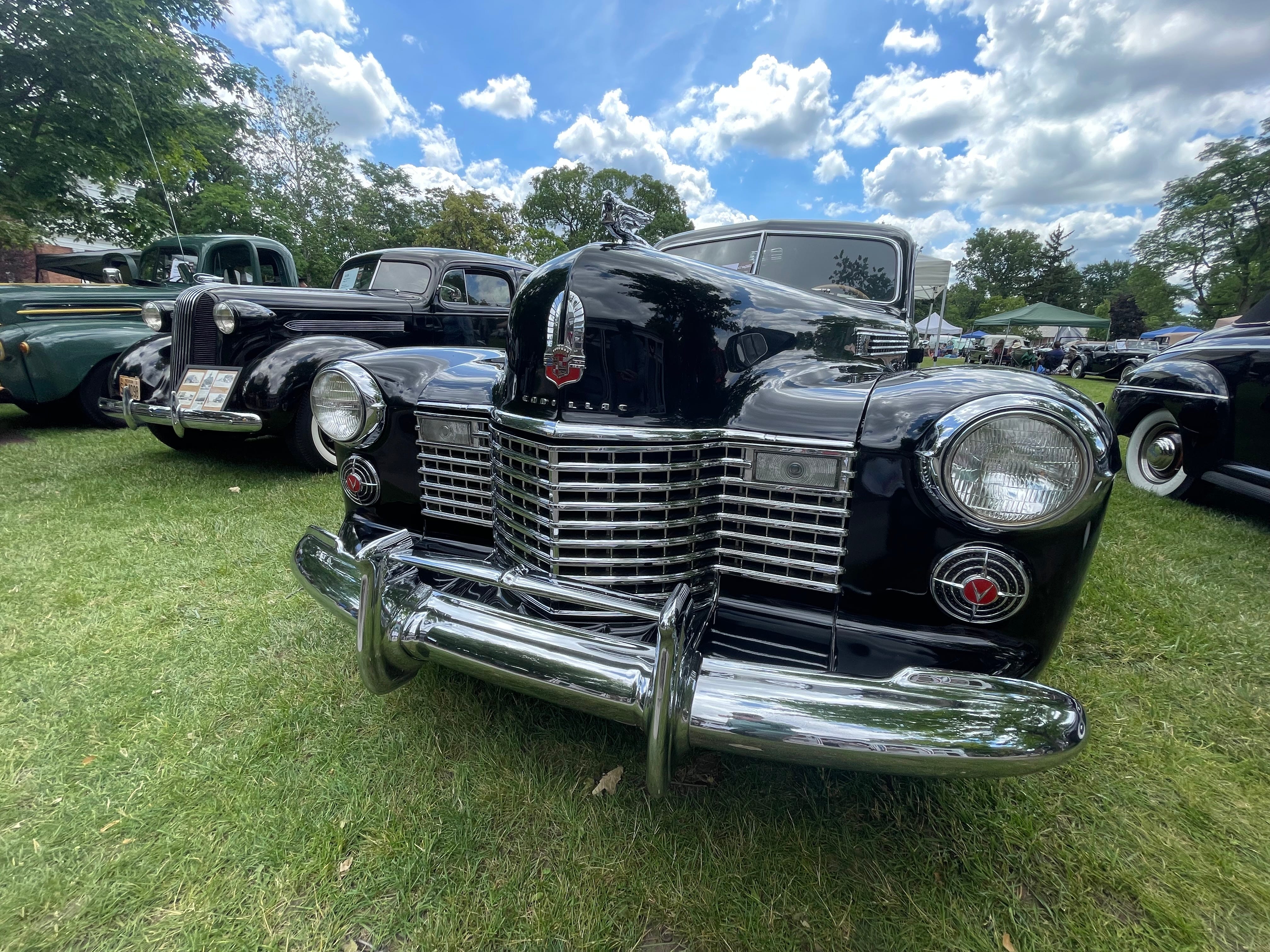
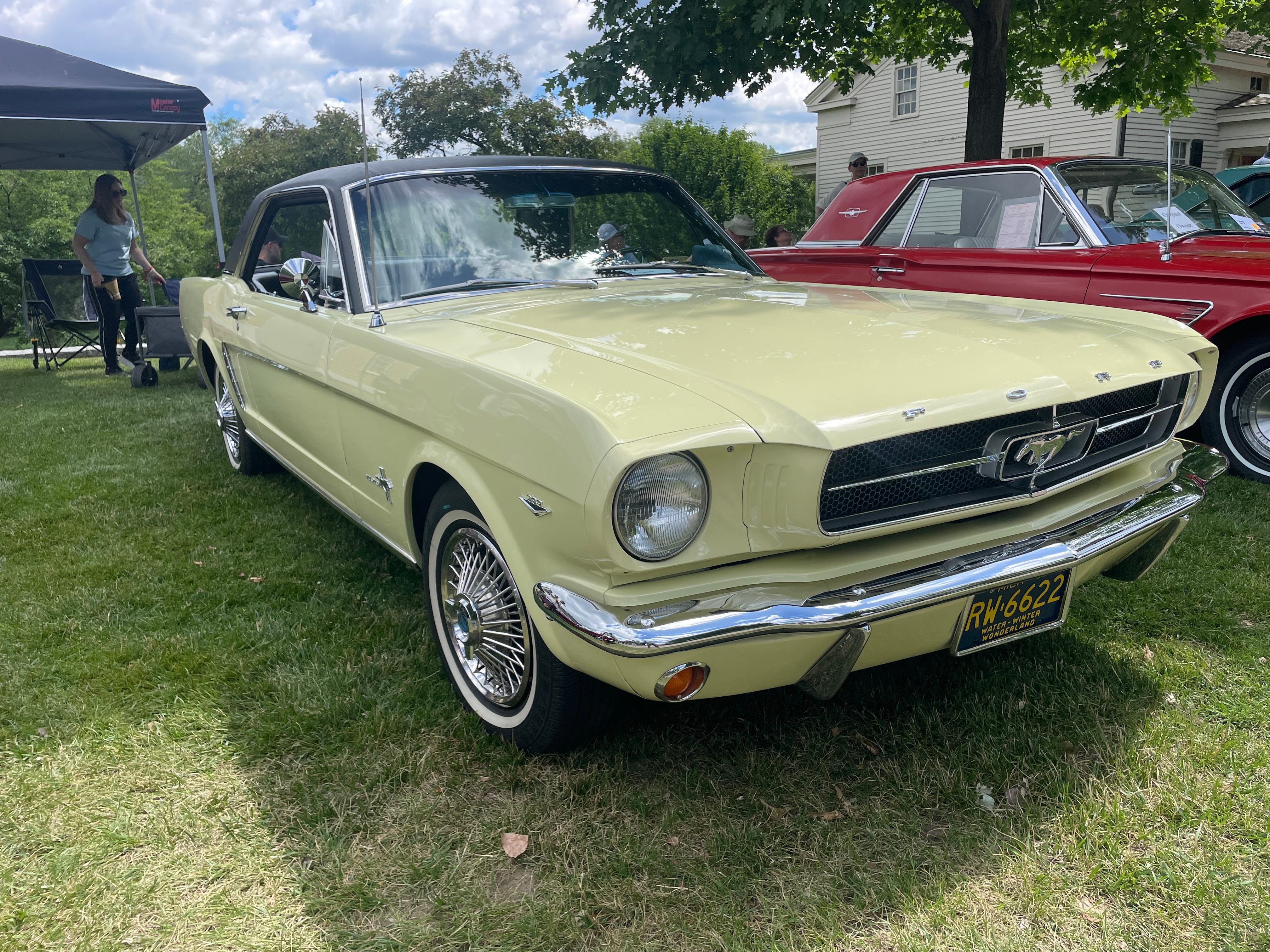
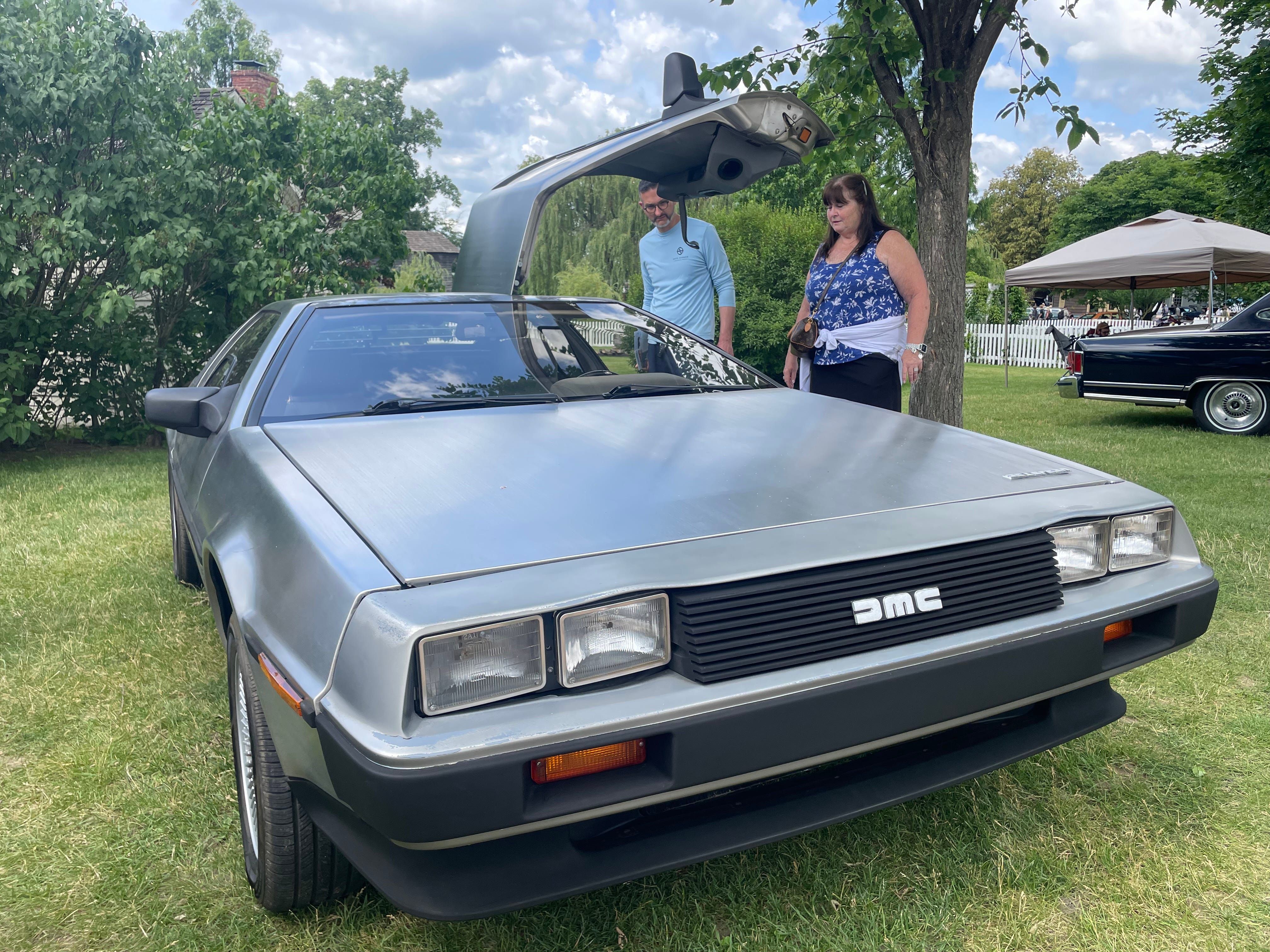
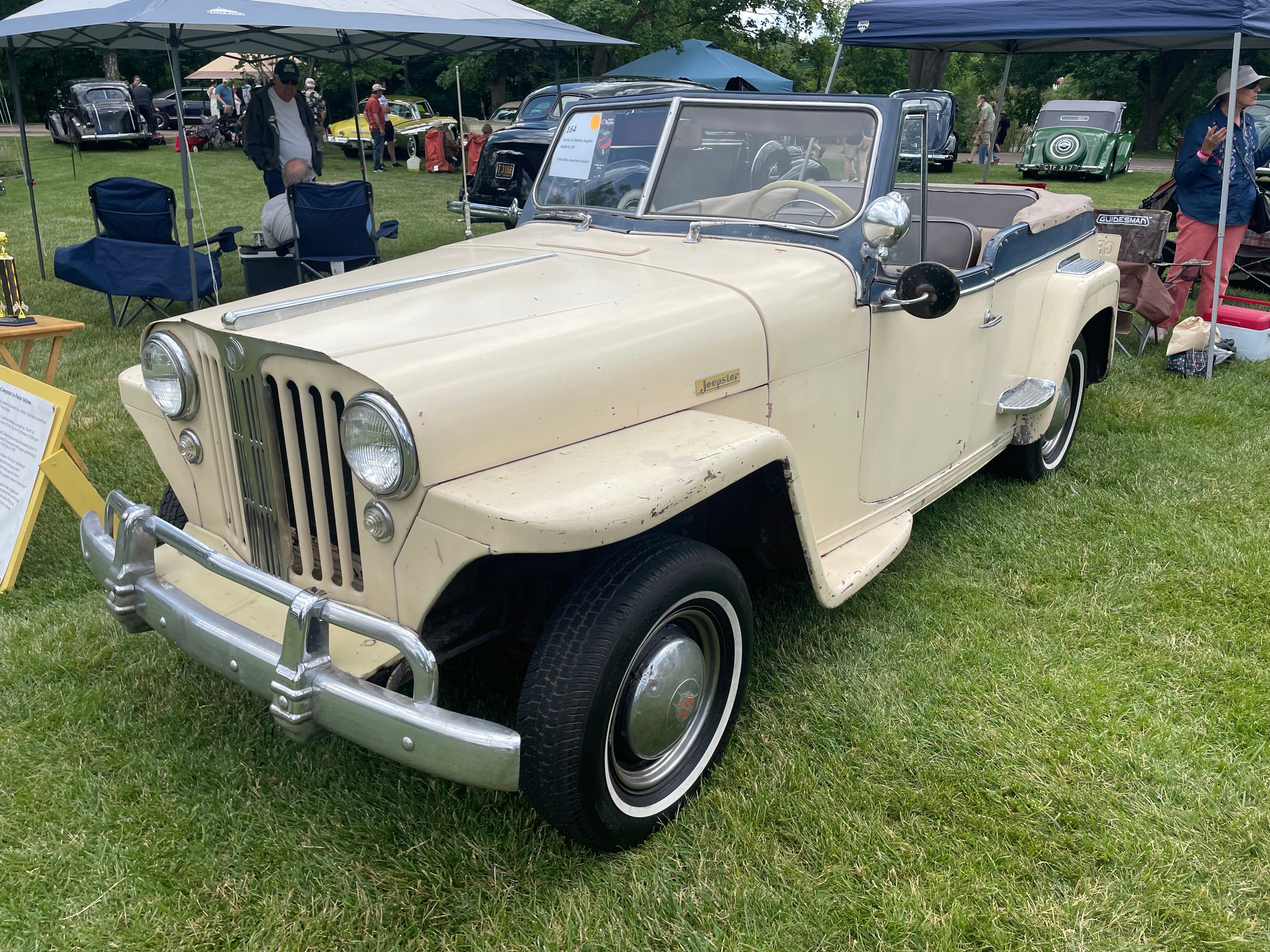
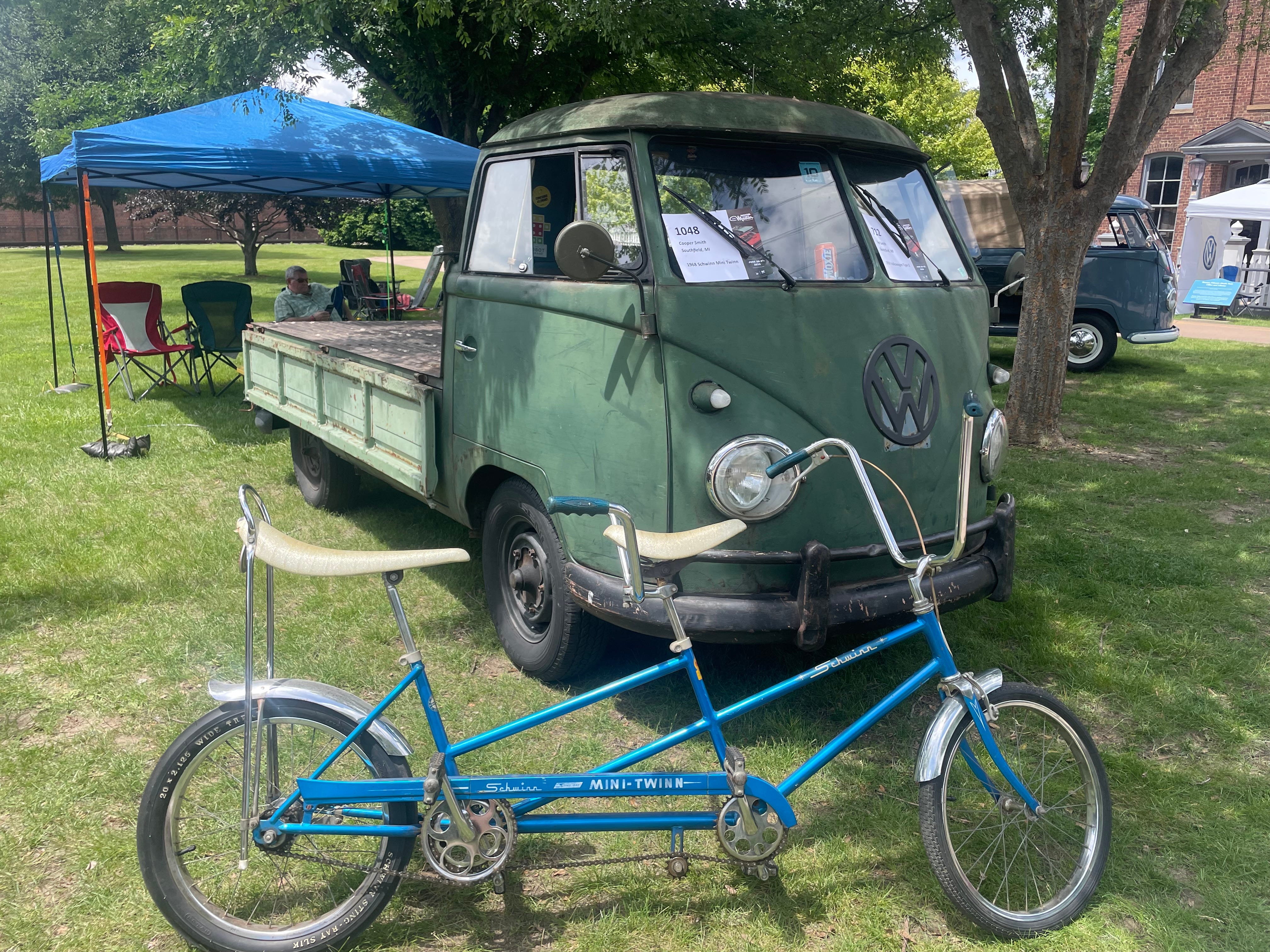
One more thing. Here’s that gallery of classics I promised way up at the top.
More later…